Source prefab pod for Warehouse, Villa, and Dormitories
Explore 30 available prefab pod options designed for warehouses, villas, and dormitories. Buyers can compare steel structure specifications, certifications like CE and ISO, and customization features to find the right temporary office or workshop solution.
Key considerations
Products List


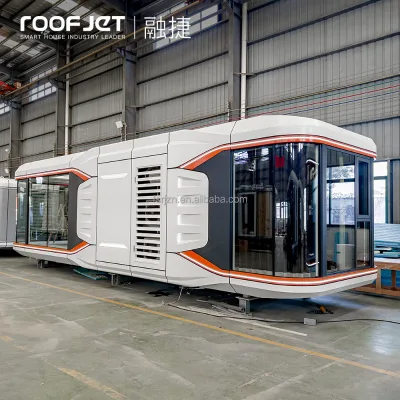


Comprehensive Sourcing Guide
Strategic Sourcing Guide for Prefab Pod Procurement
The global demand for modular and prefabricated housing solutions has surged, driven by the need for rapid deployment, cost efficiency, and sustainable construction practices. For procurement professionals, the "prefab pod" represents a versatile category encompassing single-story structures designed for diverse applications ranging from temporary offices and dormitories to permanent villas and medical facilities. Sourcing these units requires a disciplined approach that balances technical specifications, regulatory compliance, and total cost of ownership. This guide outlines the critical factors buyers must evaluate to ensure successful procurement of high-quality prefab pods, relying on verified product attributes and industry standards.
Technical Specifications and Structural Integrity
When evaluating prefab pods, the primary focus must be on the structural framework and material composition. The core integrity of these units often relies on a steel structure, which provides the necessary durability for various environmental conditions. Buyers should verify that the supplier specifies a steel structure as the primary load-bearing element, as this is a common standard for ensuring longevity and resistance to external forces. The wall materials are equally critical; observed market offerings frequently utilize aluminum for wall construction, offering a balance between weight reduction and corrosion resistance.
Dimensions and standardization vary significantly across different models. Procurement teams must scrutinize the specific dimensions provided for each unit type. For instance, some large-scale warehouse pods may reach dimensions of 6320mm in length, 5900mm in width, and 2480mm in height, while smaller residential or office models might adhere to compact standards such as 2555mm by 2468mm by 2300mm. Other configurations, such as the SB-J-L model, may feature dimensions around 1310mm by 1472mm by 2272mm. It is essential to match the unit's footprint to the intended site constraints. The standard floor area for some units is cited as 36 square meters, while others may be designed as 28 square meters or 38 square meters.
Weight is another critical technical parameter. Units with a steel structure and aluminum walls often weigh approximately 300kg, though this can vary based on the specific model and internal fittings. The loading capacity during transport is a logistical consideration; some configurations allow for two units per 40-foot high cube container, optimizing shipping efficiency. Furthermore, the lifespan of these structures is a key differentiator. High-quality prefab pods are engineered for a lifespan of up to 50 years, a figure that should be verified against the specific product datasheet rather than assumed.
Compliance, Certification, and Safety Standards
Navigating the regulatory landscape is paramount when sourcing international prefab pods. Buyers must demand clear evidence of compliance with international standards. The most frequently observed certifications in this sector include ISO and CE marks. Specifically, some products list ISO 9001 for quality management and CE for conformity with European safety, health, and environmental protection requirements. It is crucial to distinguish between general certification claims and specific product certifications. For example, while some listings mention "ISOCE" as a combined attribute, buyers should request separate, valid certificates for ISO and CE to ensure they meet the specific regulatory requirements of their target market.
Safety features are integral to the design of modern prefab pods. The structural design often includes resistance to high wind speeds, with some units rated for 12-grade typhoon conditions. This rating indicates a robust engineering capability to withstand severe weather events, a vital feature for installations in coastal or storm-prone regions. Additionally, earthquake resistance is a standard feature for many steel-structure pods, ensuring stability in seismically active zones. The window systems also play a role in safety and compliance; double or triple tempered glass is a common specification, providing enhanced security and thermal performance.
Environmental and thermal performance standards are increasingly important. Buyers should verify claims regarding thermal insulation, moisture proofing, and leak-proof capabilities. Features such as "Eco-Friendliness" and "Thermal Insulation" suggest that the units are designed to minimize energy consumption and environmental impact. However, these attributes must be backed by technical data regarding the insulation materials used and the testing protocols followed. The ability to withstand extreme temperatures, such as -40 degrees Celsius, is another specific performance metric that should be confirmed for projects in cold climates.
Cost Drivers and Pricing Dynamics
Understanding the cost structure of prefab pods is essential for budgeting and financial planning. The observed price range for these units is broad, spanning from approximately $45 to $50,000 USD. This significant variance is driven by several factors, including the size of the unit, the complexity of the design, the quality of materials, and the level of customization. A basic 28-square-meter unit will naturally cost significantly less than a custom-designed 63-meter warehouse pod.
The Minimum Order Quantity (MOQ) also influences the unit price. Suppliers often offer flexible MOQs ranging from 1 set to 500 units. Purchasing a single set is feasible for small-scale projects or pilot deployments, but bulk orders typically yield better economies of scale. The packaging method, such as film packages or bubble wrap for special requests, adds to the logistics cost but protects the product during transit. Buyers should also consider the "Fast Installation" feature as a cost driver; while it may increase the initial unit cost, it significantly reduces on-site labor expenses and project timelines, offering a better total cost of ownership.
Typical Applications and Usage Scenarios
Prefab pods are highly adaptable, serving a wide array of applications across different sectors. The versatility of these units makes them suitable for temporary and permanent installations alike. Common usage scenarios include warehouses, villas, dormitories, and temporary offices. In the hospitality sector, they are increasingly used as Airbnb accommodations or medical clinics, leveraging their rapid deployment capabilities. The "Single-Storey Warehouse" classification indicates their utility in industrial storage, while the "Apartment" and "Villa" applications highlight their residential potential.
The specific application dictates the required features. For instance, a pod intended for a medical facility must prioritize hygiene, leak-proofing, and potentially higher thermal insulation standards. A dormitory unit might focus on space efficiency and durability. The "Temporary Offices" and "Workshop" applications often require robust structural integrity to withstand heavy usage and frequent relocation. Buyers must align the product's specifications with the intended use case. For example, a unit marketed for "Airbnb" use should possess aesthetic customization options and high-quality finishes, whereas a "Warehouse" pod might prioritize structural strength and large dimensions over interior aesthetics.
Supplier Evaluation and Customization Capabilities
Selecting the right supplier involves more than just comparing prices; it requires a deep dive into their capabilities and track record. A critical factor is the availability of customization. While some products are listed as "Non-Customized," many suppliers offer "Customized" options for decoration, size, and internal layout. Buyers should verify the extent of these customization services. Can the supplier alter the wall materials? Can they adjust the window configurations or interior finishes? The ability to customize is often a key differentiator for meeting specific project requirements.
The origin of the product is another vital consideration. Most observed data points to China as the primary production origin. While this offers competitive pricing and a mature supply chain, buyers must assess the logistics and lead times associated with importing from this region. The "Online" after-sales service is a common offering, but buyers should inquire about the depth of this support. Does it include remote troubleshooting, spare parts availability, or on-site assistance? The warranty period, typically ranging from 12 months to 2 years, is a strong indicator of the supplier's confidence in their product quality. A longer warranty period, such as 2 years, suggests a higher commitment to product reliability.
Quality Control and Long-Term Procurement Considerations
Ensuring consistent quality is the responsibility of the buyer as much as the supplier. Quality control measures should be established early in the procurement process. Buyers should request detailed inspection reports and test results for critical attributes like wind resistance, earthquake resistance, and thermal performance. The "Film Package" and "Standard" packing methods should be verified to ensure they provide adequate protection during shipping. For specialized requests, such as "Bubble" packaging, the supplier must demonstrate their ability to handle fragile components without damage.
Long-term procurement considerations extend beyond the initial purchase. The "Lifespan" of 50 years is a significant value proposition, but it relies on proper maintenance and environmental conditions. Buyers should evaluate the availability of spare parts and the ease of repair. The "Fast Installation" feature reduces initial downtime, but the long-term durability of the connections and joints must be assured. Furthermore, the "Eco-Friendliness" claim should be supported by data on the recyclability of materials and the energy efficiency of the unit over its lifecycle.
| Feature Category | Key Verification Points | Typical Observed Values |
|---|---|---|
| Structure | Material type, load-bearing capacity | Steel Structure |
| Dimensions | Length, Width, Height, Floor Area | 6320x5900x2480mm, 36 sqm |
| Certifications | ISO, CE, ISO9001 | ISO, CE |
| Safety | Wind resistance, Earthquake rating | 12 Grade Typhoon, Earthquake Resistant |
| Warranty | Duration, Coverage scope | 12 Months to 2 Years |
| Customization | Decoration, Size, Layout options | Available |
| Lifespan | Expected service life | 50 Years |
In conclusion, sourcing prefab pods requires a meticulous approach that integrates technical due diligence with strategic supplier evaluation. By focusing on verified specifications, robust certifications, and clear application matching, buyers can secure units that meet their operational needs while ensuring long-term value. The broad range of available models, from compact 28-square-meter units to expansive warehouse structures, offers flexibility for diverse projects. However, the success of any procurement initiative depends on the buyer's ability to navigate the nuances of customization, logistics, and quality assurance, ensuring that the final product delivers on its promise of speed, durability, and efficiency.
FAQs
What certifications do prefab pods typically have?
Prefab pods typically hold ISO and CE certifications to ensure compliance with international safety and quality standards. Some specific models also list ISO9001 for quality management systems. Buyers should verify these certificates individually rather than relying on combined labels like ISOCE.
How long is the expected lifespan of a prefab pod?
High-quality prefab pods are engineered for a lifespan of up to 50 years when properly maintained. This durability is supported by steel structures and aluminum walls designed to resist environmental factors. Buyers should confirm this figure against specific product datasheets.
Can prefab pods be customized for specific uses?
Customization is available for decoration, size, and internal layouts for many prefab pod models. However, some units are listed as non-customized, so buyers must verify the extent of these options. Suppliers often allow adjustments to wall materials and window configurations to meet project needs.
What is the minimum order quantity for prefab pods?
The minimum order quantity for prefab pods ranges from 1 set to 500 units depending on the supplier. Purchasing a single set is feasible for small projects, while bulk orders may offer better economies of scale. Buyers should check specific MOQs before placing orders.
How are prefab pods packed for shipping?
Prefab pods are commonly packed using film packages or standard packaging methods to protect them during transit. Special requests may include bubble packaging for fragile components. This packaging ensures the units arrive safely while optimizing container loading capacity.
What warranty is provided for prefab pods?
Warranty periods for prefab pods typically range from 12 months to 2 years. A longer warranty period often indicates higher supplier confidence in product reliability. Buyers should confirm the specific coverage scope and duration for their selected unit model.
Which structural features make prefab pods safe?
Prefab pods feature steel structures and aluminum walls that provide earthquake resistance and wind resistance up to 12-grade typhoon conditions. Double or triple tempered glass windows also enhance security and thermal performance. These features ensure stability in various environmental conditions.